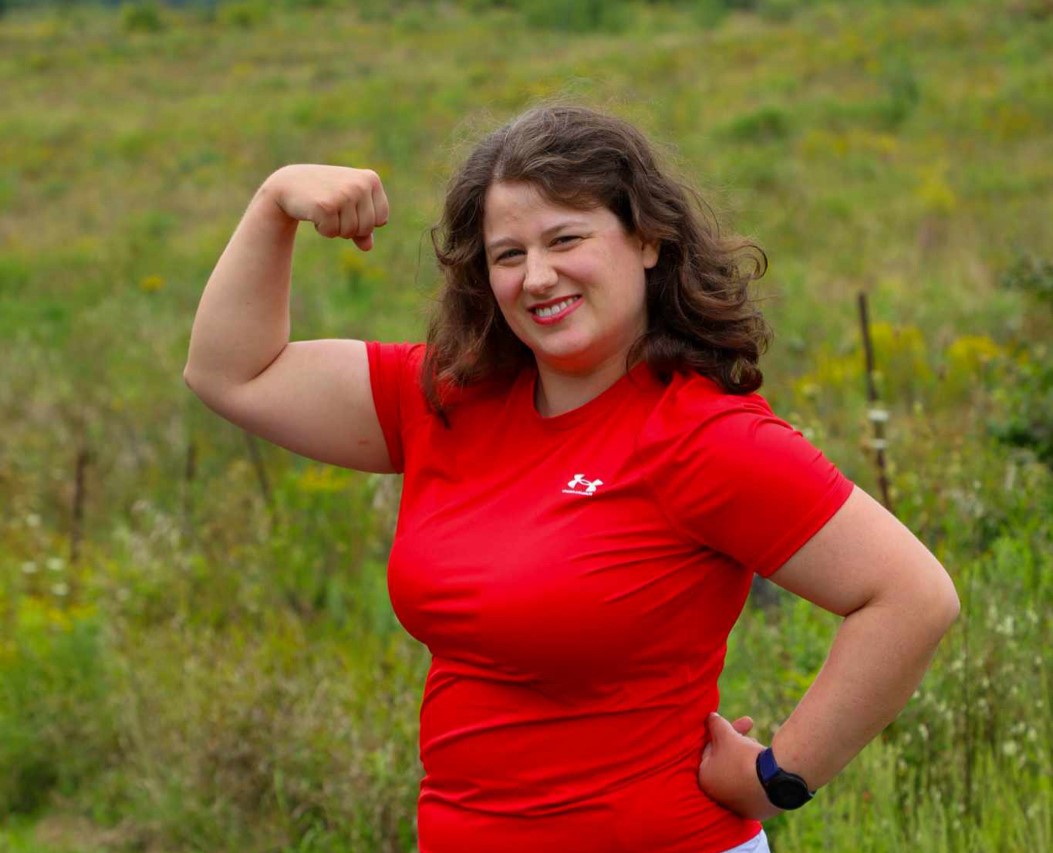
Ovafit didn't start with a business plan. It started with a friend.
I began working out with a friend who wanted some help staying active during pregnancy. As I started learning more about exercise during pregnancy, I quickly realized how confusing it could be. What can you do? What should you avoid? What is actually safe? There seemed to be a lot of uncertainty, so I erred on the side of caution and found ways to adapt movement to what she needed.
She found it helpful, even when her birth was challenging.
That experience led another friend to ask for help.
She had been through six C-sections and had reached a point where she couldn't get herself out of bed independently. We started with some very basic exercises, but even those were too difficult. So I had to get creative.
I started thinking about newborns. Babies don't begin by doing complicated exercises. They start with the simplest movements and gradually build strength, coordination, and confidence.
With that idea in mind, we went back to the basics. Slowly, we found movements she could do. Eventually, we were able to help her get moving and, importantly, get herself out of bed independently.
Those experiences sparked something in me.
Movement during motherhood isn't one-size-fits-all.
Then COVID-19 happened
I was pregnant with my own child and living in another country. I was excited to finally put everything I had learned into practice and understand what I could and couldn't do during my own pregnancy.
Instead, I found myself disappointed.
When I asked about exercise, I got the kind of general guidance you'd expect from a prenatal appointment — exercise is good for you, with a few things to avoid. That made sense; a check-up isn't built to be a full exercise consult. But it didn't answer the specific questions I had.
So, like so many people, I turned to the internet.
YouTube was full of pregnancy workouts, but many were created by full-time personal trainers, yoga instructors, or people who were already extremely fit. Some of the movements didn't feel appropriate for someone who was new to exercise, and others didn't feel safe or relevant to where I was in my pregnancy.
I was fortunate. I had a degree in Kinesiology, so I had the knowledge and experience to evaluate what I was seeing, modify exercises, and figure out what worked for me.
But I kept thinking:
What about the moms who don't have that background?
What was available to them could be confusing, intimidating, or discouraging.
Even great childbirth education — and it often is great, as far as it goes — tends to focus on labor and delivery itself. You might hear that something could happen, but not always what it might feel like or what to do about it in the moment. That's not because anyone dropped the ball. It's simply a lot of ground to cover, and exercise-specific preparation often falls outside the scope of any one appointment or class.
For me, that gap created a feeling that I was being set up to fall.
Preparing for the unpredictable
Before motherhood, I was a competitive archer.
One of the things I loved about archery was being prepared for the unpredictable. You can't control the weather, but you can understand it, prepare for it, and bring what you need. You learn how to adapt when conditions change.
I started thinking about birth and motherhood in a similar way.
We often hear that birth is like running a marathon. If that's the case, why don't we talk more about preparing for it like one?
Not because preparation can make everything predictable. It can't.
But because knowledge can make the unpredictable feel less overwhelming.
Women have been giving birth and caring for children for thousands of years, often while working, carrying, lifting, walking, running, and navigating circumstances that were far less predictable than they are today. Modern medicine and technology have given us incredible tools to make pregnancy and birth safer.
So shouldn't all of that knowledge and progress also help women feel more prepared, informed, and confident?
Then came motherhood
After having my own baby—by C-section—I experienced another side of the problem.
From my experience working with rehabilitation clinics, I knew that movement can be an important part of healing. But movement also needs to be appropriate and safe.
The question was: How do you actually start moving safely after giving birth when you don't know where to begin?
You're recovering from pregnancy and birth while simultaneously learning how to care for a newborn. You're exhausted. Your body has changed. You may be worried about your milk supply. You may be recovering from surgery or dealing with pain you weren't expecting.
And then you go online looking for help.
So much of the fitness content out there is focused on losing the pregnancy belly, losing weight, or "getting your body back."
That messaging never felt right to me.
Your body isn't something you failed to maintain.
The changes that happen during pregnancy are normal. Body fat isn't ugly. Your postpartum body isn't something you need to be ashamed of. And giving birth—however that birth happens—is an incredible physical experience.
You shouldn't have to hate your body. It did something beautiful. That makes you beautiful, and you deserve to be able to care for and appreciate the body that carried you through it.
It takes a team
As I thought more about my own experiences, I began to see motherhood as something that was never meant to be navigated through one person, one profession, or one resource.
There are so many incredible people who support women through pregnancy, birth, and postpartum. Doctors and OB-GYNs provide essential medical care. Midwives support women throughout pregnancy, birth, and beyond. Physiotherapists, including pelvic health physiotherapists, bring specialized knowledge of the body and rehabilitation. Personal trainers and fitness professionals help people build strength, fitness, and confidence. Lactation professionals, mental health professionals, doulas, and many others each bring their own valuable expertise.
No one person, and no single appointment, can cover it all—and that's exactly why a Ovafit is so important.
Each member brings a different perspective, skill set, and area of expertise. Together, they can provide a much more complete support system for moms.
I believe Kinesiology has an important place within that team.
As a Kinesiologist, I can take the science of human movement and translate it into practical, adaptable movement strategies that consider not only the body, but also the realities of motherhood.
That might mean helping a mom understand how to begin moving again, adapting movement to her current abilities, helping her build confidence, or simply making exercise feel less overwhelming.
It isn't about replacing anyone else's role.
It's about adding another person to the team.
Why Ovafit exists
Ovafit was created to be one part of a bigger support system for moms.
We aren't here to replace your doctor, midwife, physiotherapist, pelvic health professional, fitness professional, or any other member of your support team.
We believe in the value of all of them, and in what each of them brings that we don't.
We are here to help connect the dots.
To take science-backed information and make it easier to understand.
To help moms feel more confident asking questions and seeking the support they need.
To provide movement education that can adapt to different bodies, different births, different abilities, and different lives.
And to acknowledge the barriers that make exercise difficult instead of pretending those barriers don't exist.
Because every mother's journey is different.
Some moms work outside the home. Some work from home. Some stay home with their children. Some have uncomplicated pregnancies and births. Others experience significant challenges. Some have a strong support system around them, while others are navigating motherhood with very little help.
But motherhood is a full-time job, no matter what it looks like.
Ovafit is here to be one more person in your corner.
Not another voice telling you what you should be doing.
Not another program promising to get your "old body" back.
But a source of knowledge, movement education, and support that helps you feel more prepared for the unpredictable parts of motherhood.
Because you don't have to navigate it alone.
It takes a team. And we're proud to be part of yours.
Care for you so you can care for them.